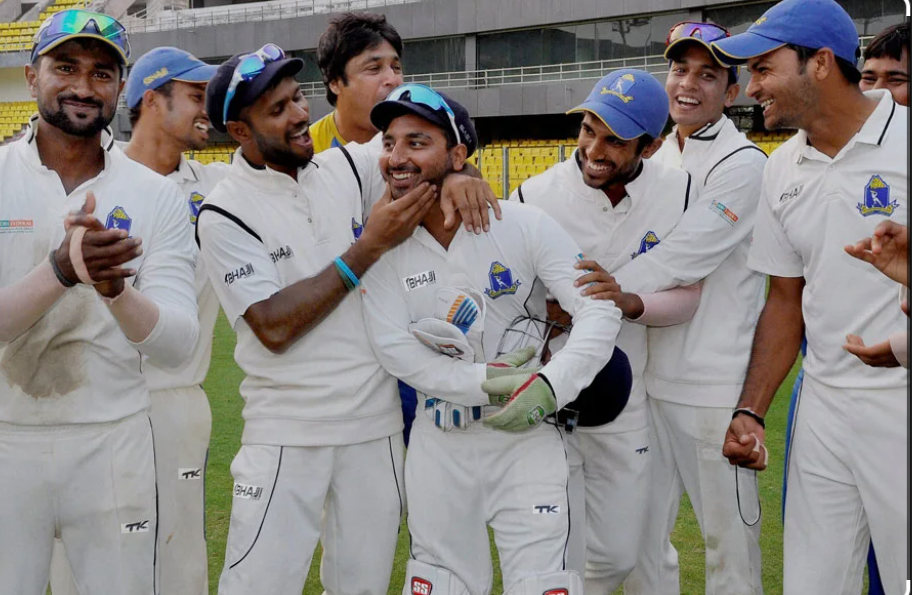
The domestic cricket rivalry between Assam and Bengal has developed through years of contrasting performances, experience gaps, and evolving team structures. From early encounters dominated by Bengal’s strong Ranji foundation to more competitive modern clashes, the journey reflects how domestic cricket grows over time. Assam entered these contests as an emerging side, focusing on learning and adaptation, while Bengal relied on depth, discipline, and consistent match control. Over the years, individual performances, tactical shifts, and pressure moments have shaped the scorecards and created a meaningful cricketing narrative. This rivalry is less about intensity alone and more about growth, resilience, and changing balance in Indian domestic cricket.
Latest Matches
Date
Tournament
Venue
Result
Winner
Margin
03 Jan 2026
Vijay Hazare Trophy
Rajkot
Bengal 302/7, Assam 217
Bengal
85 runs
16 Nov 2025
Ranji Trophy
Kalyani
Bengal 442, Assam 200 & 282/9
Match Drawn
First Innings Lead
25 Jan 2024
Ranji Trophy
Guwahati
Bengal 405, Assam 243 & 140
Bengal
162 runs
31 Oct 2023
Syed Mushtaq Ali
Mohali
Bengal 138/8, Assam 142/2
Assam
8 wickets
15 Jan 2021
Syed Mushtaq Ali
Kolkata
Assam 157/5, Bengal 144/8
Assam
13 runs
17 Jan 2018
Syed Mushtaq Ali
Ranchi
Bengal 154/5, Assam 158/7
Assam
3 wickets
Team Statistics Summary
Format
Played
Bengal Wins
Assam Wins
Draws
Bengal Win %
Assam Win %
First Class
14
8
1
5
57.14
7.14
List A
11
9
2
0
81.81
18.18
T20
8
4
4
0
50.00
50.00
Overall
33
21
7
5
63.63
21.21
Individual Batting Records
Player
Team
Matches
Innings
Runs
Highest Score
Average
Abhimanyu Easwaran
Bengal
6
8
485
142
60.62
Manoj Tiwary
Bengal
8
10
412
116
45.77
Riyan Parag
Assam
7
9
368
82
46.00
Anustup Majumdar
Bengal
5
7
310
108
44.28
Gokul Sharma
Assam
8
11
295
74
29.50
Sibsankar Roy
Assam
6
8
240
62
30.00
Individual Bowling Records
Player
Team
Matches
Overs
Wickets
Best Bowling
Economy
Shahbaz Ahmed
Bengal
6
112
19
4/48
3.42
Akash Deep
Bengal
4
78
14
5/45
3.15
Mukhtar Hussain
Assam
5
88
12
3/52
3.80
Mohammed Shami
Bengal
2
34
9
4/28
2.95
Riyan Parag
Assam
7
42
8
3/24
4.85
Ishan Porel
Bengal
3
52
7
3/38
3.20
Early Domestic Encounters and Foundation of Competition
The early phase of this domestic rivalry began with uneven expectations as one side carried a far more established cricket structure while the other was still finding its rhythm in top-level competition. These initial encounters were less about balanced competition and more about exposure, where emerging players tested themselves against experienced domestic professionals. The stronger side often controlled the sessions through disciplined batting and structured bowling, while the developing team focused on survival and learning. Despite one-sided scorecards, these matches laid the foundation for future competitiveness. Over time, small moments of resistance began to appear, such as brief partnerships and occasional breakthroughs with the ball. These flashes of effort slowly built respect and curiosity around how the gap might narrow in the coming seasons.
Match Phase
Dominant Side
Key Feature
Match Nature
Impact Level
Early Years
Bengal
Strong batting depth
One-sided
High
Early Years
Bengal
Spin control
Controlled wins
High
Early Years
Assam
Small partnerships
Learning phase
Medium
Early Years
Bengal
Experience gap
Dominance
High
Early Years
Assam
Bowling resistance
Development
Medium
Bengal Dominance in Structured Domestic Era
As the competition progressed, the stronger team established clear control through a highly structured domestic system. Their batting order consistently delivered long innings, building pressure across sessions and forcing opponents into defensive strategies. Bowlers complemented this dominance with disciplined line and length, rarely allowing easy scoring opportunities. This phase became known for repeated innings victories and large run margins, reflecting the gap in experience and execution. The opposing side often struggled to build partnerships, frequently collapsing under sustained pressure. However, even during this dominance, occasional individual performances from the underdog team showed potential for future improvement. These matches highlighted the importance of domestic experience, depth in squad rotation, and tactical patience in multi-day cricket.
Match Phase
Batting Strength
Bowling Strength
Outcome Pattern
Control Factor
Peak Era
High stability
Seam and spin mix
Innings wins
Very High
Peak Era
Long partnerships
Pressure bowling
Large margins
High
Peak Era
Top order depth
Field discipline
Controlled games
High
Peak Era
Consistency
Wicket control
Predictable wins
Very High
Peak Era
Experience edge
Tactical execution
One-sided
High
Development Phase and Emerging Resistance
In the development phase, noticeable improvements began to appear in the underdog team’s performance structure. Young players started adapting better to pressure situations, showing improved temperament against high-quality bowling attacks. Batters who once struggled to survive longer spells began rotating strike more effectively, while bowlers learned to exploit early movement and build pressure in short bursts. Although consistency remained an issue, competitive sessions became more frequent, especially in home conditions where familiarity with pitch behavior played a role. These improvements did not immediately change match outcomes, but they reduced the margin of defeat and created more engaging contests. This phase is often remembered as the transition period where experience started translating into competitive resistance.
Development Area
Improvement Level
Key Change
Match Impact
Progress Stage
Batting
Moderate
Better strike rotation
Improved stability
Developing
Bowling
Moderate
Early breakthroughs
Occasional pressure
Developing
Fielding
Low-Medium
Reduced errors
Slight impact
Improving
Strategy
Low
Basic planning
Limited change
Early stage
Confidence
Moderate
Mental strength
Better resistance
Growing
Turning Point Matches and Competitive Shifts
Certain matches marked a clear shift in competitiveness where the underdog side began challenging stronger opponents for longer durations. These games often featured resilient partnerships that frustrated bowling attacks and forced tactical adjustments. While victories remained rare, the ability to stretch matches into deeper sessions changed perceptions significantly. In some encounters, early wickets created unexpected pressure, leading to collapses that balanced the contest temporarily. These turning points did not completely alter dominance but indicated that the gap was narrowing. The psychological effect of these performances was significant, as it built belief within the squad and increased anticipation among supporters. These matches are often remembered not for final results but for the intensity of phases where outcomes remained uncertain.
Match Type
Key Moment
Momentum Shift
Result Influence
Intensity
Turning Game
Early wickets
High
Partial shift
High
Turning Game
Long partnership
Strong
Competitive
High
Turning Game
Middle collapse
Medium
Balanced
Medium
Turning Game
Bowling spell
High
Pressure phase
High
Turning Game
Final session
Medium
Deciding factor
High
Key Batting Performances and Match Control
Batting performances played a decisive role in shaping outcomes across the rivalry. The stronger side often relied on top-order stability, where centuries built platforms for commanding totals. These innings were characterized by patience, shot selection, and the ability to capitalize on loose deliveries. On the other hand, the developing team produced fewer but impactful innings that occasionally disrupted momentum and forced defensive field settings. Partnerships became a critical factor, as long stands often determined whether a team would dominate or struggle. In several matches, a single batting performance completely shifted the direction of the game, highlighting the importance of individual brilliance in domestic cricket. These performances remain central to understanding how scorecards evolved over time.
Batting Factor
Performance Type
Match Influence
Frequency
Impact
Top Order
Centuries
High control
Frequent
High
Middle Order
Recovery innings
Medium impact
Occasional
Medium
Partnerships
Long stands
Match shaping
Moderate
High
Lower Order
Support runs
Small impact
Frequent
Low
Individual Knock
Game changer
Very high
Rare
Very High
Bowling Battles and Game Changing Spells
Bowling performances often defined the rhythm of contests, especially during sessions where pressure built steadily over long spells. The dominant team’s attack relied on consistent line, movement, and strategic field placements that restricted scoring opportunities. This frequently led to collapses, particularly when batters attempted risky counterattacks. However, the developing side occasionally produced standout spells that shifted momentum unexpectedly, especially during early overs or reverse swing phases. Wicket-taking bursts often created temporary balance in matches, even if sustained pressure was difficult to maintain. These bowling battles highlighted the importance of discipline and adaptability in domestic cricket environments where conditions vary significantly.
Bowling Aspect
Effectiveness
Match Role
Consistency
Outcome Impact
Seam Attack
High
Early pressure
Strong
High
Spin Attack
Very High
Middle overs control
Very Strong
Very High
Short Spells
Medium
Momentum shift
Moderate
Medium
Breakthrough Overs
High
Collapse trigger
Occasional
High
Death Overs
Medium
Control phase
Moderate
Medium
Modern Era Evolution and Statistical Overview
In the modern phase of this rivalry, matches have become noticeably more balanced due to improved infrastructure, coaching standards, and exposure to higher levels of domestic and franchise cricket. The gap that once defined early encounters has reduced, leading to more competitive scorecards and extended match phases. Both sides now display greater tactical awareness, with smarter bowling changes and more calculated batting approaches. Fitness levels and fielding standards have also improved significantly, reducing unforced errors. While one team still holds a historical advantage, the newer contests reflect a more competitive cricketing environment. This evolution demonstrates how domestic cricket continues to grow in quality and depth over time.
Statistical Category
Earlier Era
Modern Era
Change Level
Trend
Match Balance
Low
Medium-High
Improved
Positive
Batting Average
Moderate
Higher
Increased
Rising
Bowling Efficiency
High dominance
Balanced
Reduced gap
Stable
Close Matches
Rare
Frequent
Increased
Positive
Overall Competitiveness
One-sided
Competitive
Major shift
Strong
Conclusion
The Assam vs Bengal cricket rivalry stands as a clear example of evolution in domestic cricket standards. Bengal’s early dominance highlighted experience and structure, while Assam’s gradual improvement showed persistence and development. Over time, the gap has narrowed, making contests more engaging and competitive. Key batting performances, decisive bowling spells, and shifting momentum have all contributed to memorable scorecards. Today, this rivalry reflects not just results but progress, where both teams continue to grow in skill and confidence. It remains an important fixture that showcases the depth and future potential of Indian domestic cricket.