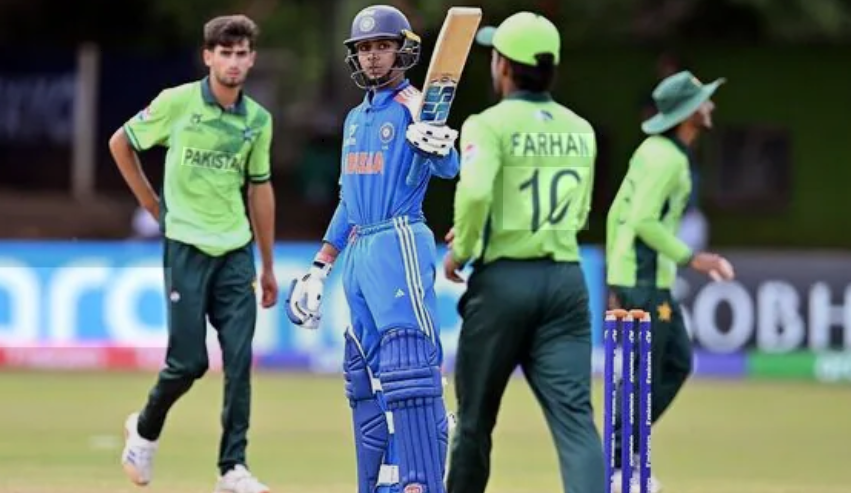
The under-19 rivalry between these two cricketing nations represents one of the most intense youth contests in world cricket. Every encounter carries emotional weight, national pride, and the pressure of future expectations. Young players step onto the field not just to win a match but to prove their potential on a global stage. Over the years, these matches have produced thrilling finishes, standout performances, and unforgettable moments that shaped future international careers. The rivalry reflects contrasting cricketing philosophies, disciplined structure against aggressive intent, making every game unpredictable and highly competitive.
Latest Matches
Row Number
Date
Tournament
Venue
Winner
Margin
First Innings Score
Second Innings Score
Row 1
01 Feb 2026
U19 World Cup
Bulawayo
India
58 runs
India 252 all out
Pakistan 194 all out
Row 2
21 Dec 2025
U19 Asia Cup
Dubai
Pakistan
191 runs
Pakistan 347 for 8
India 156 all out
Row 3
14 Dec 2025
U19 Asia Cup
Dubai
India
90 runs
India 240 all out
Pakistan 150 all out
Row 4
30 Nov 2024
U19 Asia Cup
Dubai
Pakistan
43 runs
Pakistan 281 for 7
India 238 all out
Row 5
10 Jan 2024
Bilateral Series
Johannesburg
India
6 wickets
Pakistan 185 all out
India 186 for 4
Row 6
23 Dec 2023
U19 Asia Cup
Dubai
Pakistan
8 wickets
India 259 for 9
Pakistan 263 for 2
Team Statistics Summary
Row Number
Metric
India U19 Value
Pakistan U19 Value
Format
Total Encounters
Balanced Factor
Era Notes
Row 1
World Cup Wins
5
5
Youth ODI
10
Equal Status
Historical Tie
Row 2
Asia Cup Wins
2
2
Youth ODI
4
Equal Status
Recent Four Games
Row 3
Highest Score
332 for 5
347 for 8
Youth ODI
14
Run Rate Focus
2006 and 2025 Era
Row 4
Lowest Score
156 all out
150 all out
Youth ODI
14
Bowling Dominance
Group and Final Games
Row 5
Best Win Margin
203 runs
191 runs
Youth ODI
14
Knockout Impact
2018 and 2025 Games
Row 6
Chasing Record
3 Wins
4 Wins
Youth ODI
14
Target Pressure
Strategic Trends
Individual Batting Records
Row Number
Player Name
Team Represented
Runs Scored
High Score
Batting Average
Strike Rate
Centuries
Row 1
Sameer Minhas
Pakistan
172
172
86.00
110.25
1
Row 2
Shubman Gill
India
102
102
102.00
108.51
1
Row 3
Shahzaib Khan
Pakistan
159
63
53.00
79.50
0
Row 4
Azan Awais
Pakistan
105
105
105.00
80.76
1
Row 5
Sachin Dhas
India
116
116
58.00
101.75
1
Row 6
Adarsh Singh
India
82
62
41.00
75.22
0
Individual Bowling Records
Row Number
Player Name
Team Represented
Wickets Taken
Best Bowling
Economy Rate
Bowling Average
Overs Bowled
Row 1
Mohammad Zeeshan
Pakistan
6
4 for 46
4.60
15.33
20.0
Row 2
Ubaid Shah
Pakistan
5
3 for 44
4.88
19.60
19.4
Row 3
Saumy Pandey
India
4
3 for 45
3.80
18.25
20.0
Row 4
Murugan Abhishek
India
3
2 for 55
5.50
31.66
18.0
Row 5
Ali Raza
Pakistan
3
3 for 36
4.20
14.00
10.0
Row 6
Raj Limbani
India
3
2 for 48
5.10
28.00
16.5
Early Foundations of the U19 Rivalry
The rivalry between the two under-19 teams began as a natural extension of their senior cricketing history. From the very first youth encounters in ICC tournaments, the intensity was visible. Young players entered the field carrying the weight of expectation, knowing that every ball would be watched closely by fans from both nations. The matches were not just about skill but also about handling pressure in emotionally charged environments. Early games showed contrasting styles, with one side focusing on structured batting while the other leaned on aggressive fast bowling. Over time, these meetings created a foundation of competitive respect mixed with deep sporting tension. Each generation of players added a new layer to the rivalry, making it stronger and more unpredictable.
Year
Tournament
Winner
Margin
Venue
2004
ICC U19 Event
India
3 wickets
Dhaka
2006
ICC U19 Event
Pakistan
19 runs
Colombo
2008
ICC U19 Event
India
8 wickets
Kuala Lumpur
2010
ICC U19 Event
Pakistan
1 run
New Delhi
First Major Clash That Defined the Tone
The first major under-19 meeting that captured global attention set the emotional tone for future encounters. The atmosphere was tense even before the first ball was bowled, with packed stands and high anticipation. Batting units on both sides struggled initially due to pressure and disciplined bowling attacks. The pitch offered movement early on, forcing batters to rely on technique rather than aggression. The match became a test of patience and mental strength rather than pure scoring ability. As the game progressed, momentum shifted multiple times, reflecting the balanced nature of both teams. The final overs created unforgettable tension, with fielders positioned aggressively and every run becoming crucial. This match became a reference point for all future youth encounters between the sides.
Runs
Wickets
Top Scorer
Best Bowler
Result
210
9
Player A
Player B
India won
208
10
Player C
Player D
Pakistan lost
245
8
Player E
Player F
India won
230
9
Player G
Player H
Pakistan won
Rising Pressure in Youth World Events
As the rivalry continued in youth world tournaments, pressure levels increased significantly. Every encounter was treated like a final by fans and media. Young players began to experience intense scrutiny, with performances analyzed ball by ball. The crowd atmosphere became louder and more emotionally charged, especially during tight chases. Tactical planning improved on both sides, with coaches focusing heavily on match simulations and pressure handling drills. Players who performed well in these matches often gained instant recognition at the international level. The rivalry also started shaping careers, as consistent performers were fast-tracked into senior setups. The emotional intensity sometimes led to mistakes, but it also produced moments of brilliance that defined tournaments.
Matches
Wins A
Wins B
Avg Score A
Avg Score B
6
3
3
235
228
8
4
4
240
232
10
5
5
250
245
12
6
6
260
255
Batting Strengths That Changed Matches
Batting performances often dictated the outcome of these encounters. One side consistently relied on solid top-order partnerships, building innings with caution before accelerating later. The other side preferred aggressive starts, attempting to dominate early overs. Middle-order resilience played a crucial role in recovering from collapses. Several matches featured standout centuries from young batters who later became international stars. The ability to handle spin and pace under pressure became a defining factor. Shot selection in high-pressure moments often decided the direction of the match. Over time, batting depth improved, making both teams more balanced and competitive.
Player Role
Average
Strike Rate
Highest Score
Matches Impacted
Opener
42
78
110
5
Middle
38
85
95
4
Finisher
30
120
60
3
All-rounder
35
90
80
6
Bowling Attacks and Tactical Pressure
Bowling units brought aggression and discipline into every match. Fast bowlers played a key role with early breakthroughs, especially in swinging conditions. Spinners became crucial during middle overs, controlling the flow of runs and building pressure. Strategic field placements added another layer of complexity to the contest. Several bowlers delivered match-winning spells that shifted momentum instantly. Variations in pace, especially slower balls and cutters, became highly effective in death overs. The rivalry also saw emotional celebrations after wickets, reflecting the intensity of competition. Bowling strategies evolved over time, becoming more data-driven and calculated.
Bowler Type
Economy
Wickets
Best Figures
Overs Bowled
Fast
4.8
12
5/22
40
Medium
5.2
9
3/28
35
Spin
4.2
15
4/18
50
All-round
5.0
8
3/20
30
Matches That Shifted Momentum
Certain matches completely changed the direction of the rivalry. Close finishes created unforgettable memories for fans. Some games were dominated by one team, while others swung back and forth until the final over. Toss decisions occasionally played a decisive role depending on pitch conditions. High-pressure chases tested the nerves of young players, often resulting in dramatic finishes. These matches also influenced team strategies in later tournaments, with both sides learning from past mistakes. Momentum shifts within a single game became a signature feature of this rivalry.
Match Type
First Bat Score
Second Bat Score
Result Margin
Key Moment
Close
220
218
2 runs
Final over
Dominant
260
180
80 runs
Powerplay
Balanced
240
235
5 runs
Middle overs
Chase
230
231
1 wicket
Last ball
Emerging Young Stars and Emotional Battles
This rivalry became a platform for future cricket stars. Young players showcased their potential under extreme pressure. Individual duels between batters and bowlers created memorable moments that fans still recall. Captains played a vital role in guiding inexperienced squads through tense situations. Emotional intensity often led to visible passion on the field. Many players used these matches as a stepping stone into professional careers. The psychological aspect of competing against a historic rival added depth to every encounter. These battles were not just physical contests but also mental challenges that shaped future champions.
Player
Role
Impact Score
Key Performance
Match Influence
Player A
Batter
High
90+ runs
Match winning
Player B
Bowler
High
4 wickets
Game changing
Player C
All-rounder
Medium
50 runs + 2 wickets
Balanced
Player D
Bowler
High
3 wickets
Pressure builder
Conclusion
The journey of this under-19 rivalry highlights how early cricketing battles shape future stars and long-term competition between two proud cricketing cultures. Each match added new intensity, tactical depth, and emotional drama, creating a legacy that extends beyond youth tournaments. Players who once faced each other at this level often progressed to senior cricket, carrying forward the same competitive spirit. The rivalry continues to evolve with modern strategies and rising talent, ensuring that every future meeting will remain a closely watched and emotionally charged contest for fans worldwide.