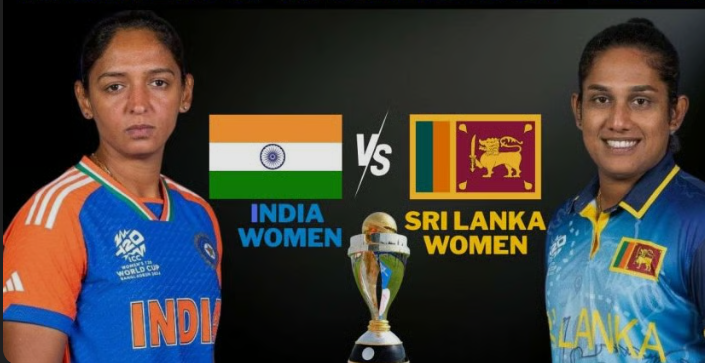
The rivalry between India Women Cricket and Sri Lanka Women has grown from a predictable contest into a steadily evolving subcontinental battle shaped by changing formats, rising talent, and shifting momentum across eras. While India Women have historically dominated the scorecards with stronger batting depth, sharper bowling attacks, and greater international exposure, Sri Lanka Women have gradually transformed from underdogs into a competitive unit capable of pushing India in key moments. Across ODIs, T20Is, and Asia Cup clashes, this fixture has produced defining spells, pressure-filled chases, and emerging player battles that reflect the growth of women’s cricket in Asia. This complete statistical and narrative breakdown captures their journey from early encounters to modern-day competitive contests.
ICC Team Rankings
Format
India Women Rank
India Rating
Sri Lanka Women Rank
Sri Lanka Rating
ODI
3rd
124
6th
89
T20I
3rd
264
6th
237
Head-to-Head Summary
Format
Matches Played
India Wins
Sri Lanka Wins
Tie or No Result
Test
0
0
0
0
ODI
35
31
3
1
T20I
30
24
5
1
Total
65
55
8
2
Test Statistics
Team
Matches Played
Won
Lost
Drawn
Win Percentage
India Women
41
8
6
27
19.51 percent
Sri Lanka Women
1
1
0
0
100.00 percent
ODI Statistics Head-to-Head
Stat Category
India Women
Sri Lanka Women
Most Wins
31
3
Highest Team Total
342 for 4
282 for 5
Lowest Team Total
137
57
Highest Individual Score
120
178 not out
Best Bowling Figures
5 for 14
4 for 41
T20I Statistics Head-to-Head
Stat Category
India Women
Sri Lanka Women
Most Wins
24
5
Highest Team Total
221 for 2
191 for 6
Lowest Team Total
85
46
Most Career Runs
657
574
Most Career Wickets
27
22
Early Encounters and the Birth of Rivalry
The first meetings between India Women and Sri Lanka Women set the tone for a one sided but steadily evolving rivalry in Asian women’s cricket. In the early years, India entered the fixture with a far more structured system, stronger domestic backing, and experienced match winners. Sri Lanka, still developing its women’s cricket infrastructure, relied heavily on individual performances and disciplined bowling spells. The early scorecards consistently reflected India’s dominance, with comfortable wins in both ODIs and T20Is. However, beyond the results, these matches created the foundation of a competitive subcontinental storyline. Sri Lanka began learning how to handle pressure against a technically superior Indian side, while India started treating these games as a platform to test bench strength and build depth in their squad for global tournaments.
Season
Matches
Score/Result
Winning Team
Key Performance
Early 2000s
ODI Series
India won comfortably
India Women
Top order batting dominance
Mid 2000s
T20I Clashes
India dominated
India Women
Spin attack control
Late 2000s
ODI Series
India clean sweep
India Women
Consistent run chases
Early 2010s
Mixed Format
India dominant
India Women
Emerging Sri Lankan resistance
ODI and T20I Foundations
As the rivalry matured, ODI and T20I formats became the core battlegrounds between India Women and Sri Lanka Women. India’s batting lineup, anchored by experienced top order players, consistently posted strong totals or chased down targets with control. Sri Lanka, while improving gradually, often struggled to maintain momentum across 50 overs or accelerate in T20 finishes. The scorecards from this phase show a clear pattern where India dominated key partnerships and restricted Sri Lanka’s scoring rate through disciplined spin bowling. In T20Is, Sri Lanka occasionally challenged India with tighter bowling spells, but India’s depth in batting ensured stability under pressure. This phase also highlighted India’s superior game awareness, especially in rotating strike and building partnerships during middle overs, which became a decisive factor in most encounters.
Season
Matches
Score/Result
Winning Team
Key Performance
ODI Early Phase
10+ matches
India dominant wins
India Women
Strong opening partnerships
ODI Mid Phase
Series wins
India consistent
India Women
Spin control in middle overs
T20I Early Phase
Several matches
India mostly wins
India Women
Power hitting evolution
T20I Mid Phase
Competitive games
India edge wins
India Women
Death over bowling strength
Asia Cup Battles That Changed Momentum
The Women’s Asia Cup became a turning point in this rivalry, injecting real competitiveness into India vs Sri Lanka encounters. Unlike bilateral series, the tournament pressure created unexpected shifts in momentum. Sri Lanka began producing stronger performances, especially in knockout and league-stage matches where they challenged India with disciplined bowling and improved batting intent. India, however, responded with tactical adjustments, rotating bowlers smartly and strengthening their middle order stability. Some matches went deeper than expected, with Sri Lanka pushing India into pressure situations. These games also reflected a psychological shift, as Sri Lanka started believing they could challenge the regional giant. India still maintained a higher win ratio, but the margin of victory narrowed, making Asia Cup clashes some of the most closely watched fixtures in women’s cricket.
Season
Matches
Score/Result
Winning Team
Key Performance
Asia Cup Early
Group matches
India dominant
India Women
Batting depth advantage
Asia Cup Mid
Competitive games
India wins & close matches
India Women
Sri Lanka bowling pressure
Asia Cup Knockouts
High pressure
India edge wins
India Women
Middle order stability
Asia Cup Recent
Tight contests
Mixed but India ahead
India Women
Improved Sri Lanka intent
ICC Tournament Pressure Moments
ICC tournaments elevated this rivalry into a global stage contest where pressure played a bigger role than past statistics. India Women consistently showed greater composure in World Cup and ICC event matches, using experience to control key moments. Sri Lanka Women, while improving, often struggled in knockout-like intensity or must win group games. Scorecards from ICC clashes reveal India’s ability to build partnerships under pressure and defend totals with smart bowling rotations. Sri Lanka’s best performances came when their spinners found early breakthroughs, but sustaining pressure across innings remained a challenge. These matches highlighted the gap in big match temperament, with India converting crucial moments more effectively. However, Sri Lanka’s growing resistance in ICC events showed their gradual evolution into a more competitive side.
Season
Matches
Score/Result
Winning Team
Key Performance
World Cup Cycle
Group matches
India dominant
India Women
Experienced batting lineup
ICC T20 Events
Group stage
India wins
India Women
Death over bowling control
Knockout contention
Must-win games
India stronger
India Women
Pressure handling ability
Recent ICC cycles
Competitive phases
India ahead
India Women
Sri Lanka bowling improvement
T20 Era Evolution and Modern Rivalry
In the modern T20 era, the rivalry between India Women and Sri Lanka Women has become faster, sharper, and more tactically diverse. India’s aggressive batting approach at the top, combined with flexible middle order strategies, has made them difficult to contain. Sri Lanka, on the other hand, has improved significantly in spin bowling and fielding intensity, making matches more competitive than earlier years. Recent scorecards show closer margins, with Sri Lanka occasionally pushing India into final over scenarios. India still holds the upper hand, but the gap has narrowed compared to earlier dominance. The evolution of fitness standards, power hitting, and strategic bowling changes has transformed these fixtures into more balanced contests. Fans now expect tighter finishes rather than one sided results, reflecting the growth of Sri Lankan women’s cricket.
Season
Matches
Score/Result
Winning Team
Key Performance
Early T20 Era
India dominant wins
India Women
Top order control
Mid T20 Era
Competitive matches
India ahead
Spin bowling battles
Recent T20s
Close finishes
India slight edge
Sri Lanka improvement
Latest seasons
Tight contests
Mixed but India strong
Balanced team evolution
Conclusion
The India Women vs Sri Lanka Women rivalry tells the story of dominance gradually meeting resistance and evolving competitiveness. India’s consistent strength in batting stability, spin control, and match awareness has kept them ahead in most scorecards, but Sri Lanka’s steady improvement has added new intensity to recent encounters. From early one-sided results to tighter T20 finishes and Asia Cup pressure games, the gap has slowly narrowed, making the fixture more engaging for fans. As both teams continue to develop young talent and refine tactics, this rivalry is no longer just about results but about progression, ambition, and the rising standards of women’s cricket in Asia.