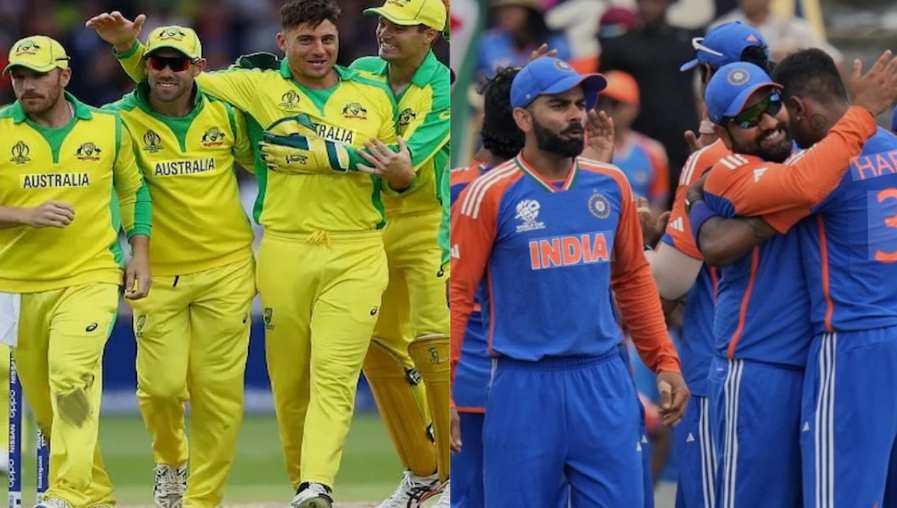
India and Australia share one of the most intense rivalries in international cricket shaped by decades of competition across Tests, ODIs, and T20Is. From the early days of Australian dominance to India’s rise as a global powerhouse, every encounter has carried pressure, pride, and emotional weight. The contests have produced unforgettable batting duels, fierce bowling spells, and dramatic match situations that often went down to the final sessions. Whether played in India’s spinning conditions or Australia’s pace-friendly pitches, both teams have consistently pushed each other beyond limits, creating a rivalry built on respect, aggression, and world-class performances that define modern cricket history.
Latest Matches
Date
Format
Venue
Winner
Margin
Player of the Match
28 Nov 2025
T20I
Melbourne
India
4 wickets
Hardik Pandya
26 Nov 2025
T20I
Sydney
Australia
8 wickets
Glenn Maxwell
23 Nov 2025
T20I
Brisbane
India
12 runs
Jasprit Bumrah
17 Nov 2025
ODI
Sydney
Australia
5 wickets
Mitchell Marsh
14 Nov 2025
ODI
Melbourne
India
6 wickets
Virat Kohli
11 Nov 2025
ODI
Perth
Australia
44 runs
Travis Head
Team Statistics Summary
Format
Highest Score Ind
Lowest Score Ind
Highest Score Aus
Lowest Score Aus
Most Defeats
Test Matches
705 for 7 dec
36 all out
659 for 4 dec
83 all out
India
One Day Internationals
399 for 5
63 all out
389 for 4
101 all out
India
Twenty20 Internationals
235 for 4
74 all out
201 for 7
86 all out
Australia
ICC World Cup
352 for 5
125 all out
359 for 2
128 all out
India
T20 World Cup
205 for 5
135 all out
184 for 5
143 all out
Australia
Champions Trophy
307 for 8
103 all out
310 for 5
171 all out
Australia
Individual Batting Records
Player Name
Format
Matches
Innings
Total Runs
Highest Score
Average
Sachin Tendulkar
Test
39
74
3630
241 not out
55.00
Ricky Ponting
Test
29
51
2555
257
54.36
Virat Kohli
ODI
49
46
2367
123
53.79
Rohit Sharma
ODI
44
44
2332
209
56.87
Steve Smith
Test
19
37
2042
192
65.87
Glenn Maxwell
T20I
22
21
554
103 not out
32.58
Individual Bowling Records
Player Name
Format
Matches
Innings
Total Wickets
Best Bowling
Economy
Anil Kumble
Test
20
38
111
8 for 141
3.03
Nathan Lyon
Test
27
49
121
8 for 50
3.12
Ravichandran Ashwin
Test
22
42
114
7 for 103
2.72
Brett Lee
ODI
32
32
55
5 for 27
4.71
Kapil Dev
ODI
41
41
45
5 for 43
3.66
Jasprit Bumrah
T20I
15
15
20
3 for 16
6.45
When India First Faced Australia’s Early Dominance
India’s early encounters against Australia were shaped by long spells of pressure, disciplined bowling attacks, and surfaces that often favored the home side. The visiting team struggled to convert promising starts into big wins, but each tour slowly built resilience and experience. Australian fast bowlers tested technique with pace and bounce while Indian batters focused on survival and patience. Over time, these matches became lessons in temperament rather than just results. India began to understand the importance of partnerships and defensive strategy in foreign conditions. Even when results went against them, individual performances showed growing confidence. The gap in experience was clear, but the foundation for a future competitive rivalry was being laid quietly. These early contests are now remembered not for dominance alone but for how they shaped a team learning to stand firm against one of the strongest sides in world cricket.
Year
Venue
Format
Winner
1947
Brisbane
Test
Australia
1948
Melbourne
Test
Australia
1956
Kanpur
Test
Draw
1960
Kolkata
Test
Australia
1969
Sydney
Test
Australia
The Era of Spin Control and Survival Battles
As cricket evolved, spin bowling became India’s strongest weapon in controlling matches against Australia. Subcontinental pitches offered turn and slow bounce, making survival difficult for visiting batters. Indian bowlers used flight, drift, and variation to create pressure over long sessions. Australian batters responded with aggressive footwork and attacking intent, turning many matches into endurance battles. These encounters often stretched into fifth days where patience mattered as much as skill. India learned to exploit conditions better, while Australia refined techniques against spin. The rivalry during this phase was defined by tactical adjustments rather than outright dominance. Every session carried importance, and momentum shifted slowly. Matches often became mental contests where concentration errors decided outcomes. This era established respect between the two teams and highlighted how different playing styles could still produce balanced and gripping cricket contests.
Venue
Spin Impact
Top Batter
Result
Chennai
High
Border
Draw
Delhi
Very High
Gavaskar
India
Mumbai
High
Waugh
Australia
Nagpur
Extreme
Dravid
India
Adelaide
Moderate
Taylor
Australia
Leadership Rivalry Between Gavaskar and Border
The leadership era of Sunil Gavaskar and Allan Border brought structure and intensity to the contest. Both captains were known for their discipline, calm temperament, and refusal to surrender under pressure. India relied on technical batting strength and spin-heavy bowling plans, while Australia built resilience through aggressive field placements and pace attack rotations. Matches during this phase were often tight, with small margins deciding outcomes. Border’s determination to rebuild Australian cricket and Gavaskar’s focus on consistency created a balanced rivalry. Players on both sides began respecting each other’s strategies, even while competing fiercely on the field. The contest became less about surprise and more about execution under pressure. This phase also laid the groundwork for future tactical battles that would define modern cricket between these two nations.
Captain
Matches
Wins
Style
Gavaskar
20
4
Defensive
Border
25
9
Resilient
Draws
–
12
Balanced
Key Venue
Chennai
–
Spin-heavy
Era Focus
1979-1992
–
Tactical
The Unforgettable Chennai Tie That Changed Everything
One of the most dramatic encounters came in Chennai, where both teams pushed each other to the absolute limit in a historic finish. The match saw brilliant batting partnerships, sharp bowling spells, and a final passage of play that left fans stunned. India’s lower order resisted intense pressure while Australia fought back with aggressive field settings. Every run became valuable and every wicket shifted momentum. The tension reached its peak in the final overs, where neither team could break through decisively. This match is remembered for its balance, intensity, and emotional impact on players and supporters alike. It demonstrated how evenly matched the teams had become in challenging conditions. The contest became a reference point for future generations about how Test cricket can produce unforgettable drama without needing a clear winner.
Innings
Runs
Top Scorer
Result
India 1st
370
Border
Competitive
Australia 1st
369
Boon
Competitive
India 2nd
190
Gavaskar
Pressure
Australia 2nd
191
Waugh
Tight chase
Match Type
Test
–
Historic
Batting Genius That Dominated Australian Bowling
A defining phase of the rivalry was shaped by legendary batting performances that repeatedly challenged Australian bowlers. One of the greatest contributors was Sachin Tendulkar, whose ability to adapt across conditions made him a constant threat. His innings in Perth, Sydney, and Sharjah became examples of technical mastery under pressure. Australia responded with aggressive pace attacks, but his timing and shot selection often neutralized their plans. The contest became a battle between raw pace and controlled stroke play. Fans witnessed innings where momentum shifted rapidly due to individual brilliance. These performances added emotional weight to the rivalry and inspired younger players on both sides. Every match featuring such key batters felt like a separate story within the larger competition. The balance between bat and ball became the central theme during this era, making each encounter unpredictable and highly competitive.
Player
Runs vs AUS
Best Score
Centuries
Tendulkar
3000+
241*
9
Ponting
2500+
257
8
Dravid
2000+
233
6
Laxman
1800+
281
5
Gilchrist
1500+
172
4
Kolkata Comeback That Redefined Possibility
The iconic match in Kolkata remains one of the most remarkable comebacks in cricket history. After following on, India produced extraordinary resistance led by VVS Laxman and Rahul Dravid. Australia appeared in full control before momentum shifted completely through long batting partnerships. Harbhajan Singh’s bowling earlier in the match had already applied pressure, but the second innings batting turned the game upside down. Australia’s bowlers struggled to break partnerships as time slipped away. The psychological shift during this match was massive, as confidence moved from one dressing room to the other. It became a symbol of resilience and belief in difficult situations. Fans witnessed how patience and discipline could overturn even the most dominant positions. The result changed how future matches were approached, especially in terms of tactical decisions like follow-on enforcement.
Innings
Score
Key Player
Outcome
India 1st
171
Harbhajan
Under pressure
Australia 1st
445
Ponting
Dominant
India 2nd
657
Laxman
Historic recovery
Australia 2nd
212
Hayden
Collapse
Match Result
India win
Dravid
Legendary
Modern Era Intensity and Tactical Evolution
In the modern era, the rivalry has become faster, sharper, and more strategically advanced. Captains now rely heavily on data analysis, player matchups, and situational planning. Virat Kohli brought a new level of aggression and intensity, especially in overseas conditions. Australia responded with structured bowling plans and disciplined batting orders. Matches are now decided not only by skill but also by preparation and adaptability. Field placements, strike rotation, and power hitting have become central themes. The emotional intensity remains high, with players showing visible competitiveness on the field. This phase has produced some of the closest white-ball contests and high-pressure Test series. The rivalry continues to evolve, reflecting the changing nature of modern cricket where fitness, strategy, and mental strength are equally important.
Format
Matches
India Wins
Australia Wins
Tests
100+
30+
45+
ODIs
140+
55+
80+
T20Is
30+
18
12
ICC Events
20+
10
9
Neutral Venues
Mixed
Balanced
Balanced
Conclusion
The rivalry between India and Australia has grown into one of cricket’s greatest spectacles, driven by unforgettable matches, legendary players, and shifting eras of dominance. Each generation has added new chapters filled with drama, tactical brilliance, and emotional intensity. From historic Test comebacks to high-pressure ICC clashes, both teams have tested each other’s mental and technical strength. The rivalry continues to evolve with modern cricket, but its essence remains unchanged competitive spirit, national pride, and the hunger to outperform a worthy opponent. It stands today as a symbol of excellence and the highest level of international cricket competition.