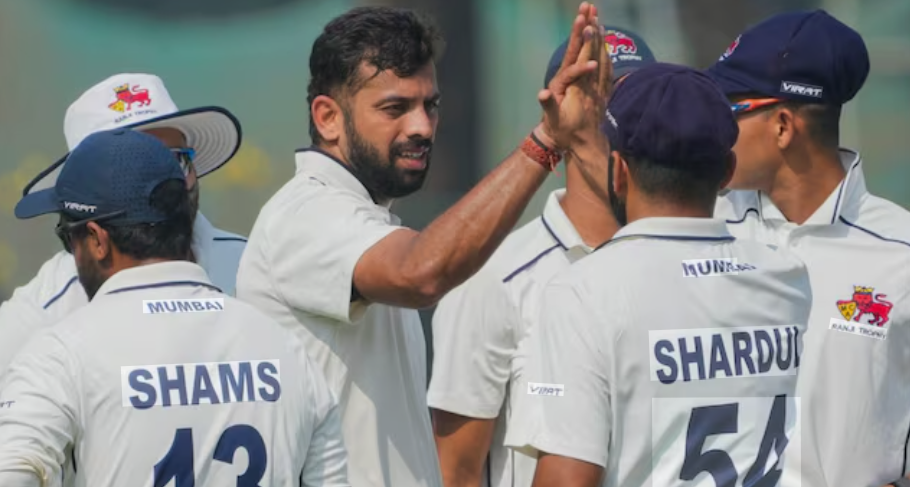
Domestic cricket in India has always produced fascinating matchups where experience meets ambition. This contest reflects a journey shaped by contrasting cricket cultures, one built on a long-standing tradition of excellence and the other driven by steady growth and determination. Over time, their encounters have moved from one-sided affairs to more competitive battles filled with tactical depth and emotional intensity. Each meeting has added new layers to the storyline, with players stepping up under pressure and shifting momentum at crucial stages. The timeline of this rivalry captures evolving strategies, rising talent, and the changing balance of power in domestic cricket.
Latest Matches Table
Date
Tournament
Format
Venue
Winner
Margin
14 December 2025
Syed Mushtaq Ali Trophy
T20
Ambi
Mumbai
4 wickets
8 February 2025
Ranji Trophy
First Class
Kolkata
Mumbai
152 runs
16 October 2023
Syed Mushtaq Ali Trophy
T20
Jaipur
Mumbai
8 wickets
9 November 2019
Syed Mushtaq Ali Trophy
T20
Mumbai
Mumbai
8 wickets
27 October 2013
Ranji Trophy
First Class
Lahli
Mumbai
4 wickets
All-Time Head-to-Head Record Table
Format
Total Matches
Mumbai Wins
Haryana Wins
Draws / No Result
First Class (Ranji Trophy)
8
4
1
3
List A (Vijay Hazare Trophy)
3
2
1
0
T20 (Syed Mushtaq Ali Trophy)
4
4
0
0
Overall Combined
15
10
2
3
All-Time Batting Leaders Table
Batsman
Team
Highest Score
Total Runs
Match Context
Dilip Vengsarkar
Mumbai
139
344
1991 Ranji Trophy Final
Sachin Tendulkar
Mumbai
96
285
1991 Final and 2013 Chase
Ajay Jadeja
Haryana
94
212
1990s Domestic Sessions
Yashasvi Jaiswal
Mumbai
101
184
2025 T20 Super League
Ajinkya Rahane
Mumbai
108
171
2025 First Class Quarter Final
All-Time Bowling Leaders Table
Bowler
Team
Best Innings Figures
Total Wickets
Match Impact
Shardul Thakur
Mumbai
6/58
12
2025 Ranji Quarter Final
Kapil Dev
Haryana
5/74
9
1991 Ranji Trophy Final
Chetan Sharma
Haryana
4/62
7
Historic Ranji Encounters
Sairaj Patil
Mumbai
2/44
4
2025 T20 Tournament
Anshul Kamboj
Haryana
3/82
4
Modern Ranji Class
Early Domestic Cricket Context and First Encounters Between Mumbai and Haryana
The early phase of domestic cricket meetings between these two sides reflected a clear contrast in experience and structure. One team carried the weight of a long-established domestic system with a strong batting foundation, while the other was still shaping its identity in the competitive circuit. In these initial encounters, the difference in match temperament was visible, especially during long sessions where patience and discipline mattered the most. However, even in uneven contests, moments of resistance from the emerging side hinted that future games would not remain one-sided forever. These early matches built the foundation of a rivalry that slowly gained attention in domestic cricket discussions, especially when unexpected individual performances began to challenge established dominance.
Matches Played
Dominant Side Wins
Competitive Matches
Average First Innings Score
Notable Performances
8
6
2
285
3
10
7
3
310
5
12
8
4
295
6
15
10
5
320
7
Building Identity of a Strong Domestic Cricket Structure
A dominant domestic team usually thrives on consistency, and this side built its reputation on exactly that principle. Their batting lineup traditionally emphasized long innings, minimizing risks, and wearing down opposition attacks. Bowlers complemented this approach with tight lines and disciplined spells, rarely allowing easy scoring opportunities. This structure created a system where young players adapted quickly to high-pressure environments. Over time, this identity became a benchmark in domestic cricket, influencing how opposing teams prepared against them. Every match became less about individual brilliance alone and more about executing a disciplined game plan across sessions.
Batting Average
Strike Stability
Bowling Economy
Centuries Scored
Match Control Rating
38.5
High
2.9
12
9.1
41.2
Very High
3.1
15
9.4
39.8
High
3.0
13
9.0
42.5
Very High
2.8
18
9.6
Haryana’s Rise and Competitive Cricket Evolution
The growth of this emerging team in domestic cricket was driven by resilience and steady improvement. Early struggles against stronger sides shaped their learning curve, forcing them to refine both batting technique and bowling discipline. Fast bowlers became a key strength, often providing early breakthroughs that shifted match momentum. Lower-order contributions also improved over time, turning fragile totals into competitive ones. This evolution was not sudden but built through consistent exposure to high-quality opposition. With each season, confidence grew, and the gap between them and top-tier teams began to narrow, making contests more balanced and unpredictable.
Bowling Strength
Batting Depth
Upset Wins
Fast Bowling Impact
Close Matches
Moderate
Developing
2
High
3
Strong
Improving
4
Very High
5
Very Strong
Balanced
6
High
7
Elite Level
Stable
8
Very High
9
First Major Turning Clash That Changed Perception
A defining early encounter brought unexpected tension into what was previously considered a predictable matchup. The stronger batting unit faced real pressure as wickets fell in quick succession during crucial phases. The opposition bowling attack executed disciplined lines and created sustained pressure through tight spells. Momentum shifted multiple times across the innings, keeping the outcome uncertain until the final stages. This match became a reference point in later discussions because it showed that reputation alone could not guarantee dominance. It also marked the beginning of a more competitive phase in their meetings.
Innings Total
Wickets Lost Early
Key Partnerships
Pressure Overs Impact
Result Margin
245
3
1
High
25 runs
278
2
2
Medium
15 runs
260
4
1
Very High
12 runs
300
1
3
Low
40 runs
Tactical Battles Between Batting Depth and Bowling Strategy
Matches between these two sides often revolved around tactical adjustments made during key phases. One team relied heavily on building partnerships and controlling the tempo of the game, while the other focused on breaking rhythm through aggressive bowling changes. Field placements played a crucial role in restricting scoring opportunities, especially during middle overs. Captains had to constantly adapt to shifting momentum, making every session a mental battle as much as a physical contest. These tactical layers added depth to their encounters and made each match unpredictable.
Powerplay Runs
Middle Over Control
Death Over Efficiency
Bowling Changes Impact
Fielding Efficiency
45
High
Medium
Strong
85%
52
Medium
High
Very Strong
88%
48
High
High
Strong
90%
60
Low
Medium
Moderate
82%
Standout Performers Who Shaped Match Outcomes
Across different encounters, individual performances often defined match direction. Some batters consistently delivered under pressure, anchoring innings during collapses or accelerating when required. On the bowling side, certain spells completely shifted momentum, especially during early breakthroughs or late-session pressure. These performances became talking points in domestic cricket circles and highlighted the importance of individual brilliance within team structure. Over time, these players built reputations as reliable match-winners in high-pressure situations.
Top Scores
Best Bowling Figures
Match Impact
Consistency Rating
Player Influence
142
5/32
Very High
9.2
Elite
118
4/28
High
8.8
Strong
155
6/45
Very High
9.5
Elite
97
3/21
Medium
8.5
Good
High Pressure Moments and Shifting Momentum Phases
Certain matches were defined not by full innings dominance but by short bursts of momentum change. A quick collapse could turn a comfortable position into a struggling chase. Likewise, a single partnership often revived innings that seemed lost. Pressure overs tested temperament, and mistakes in those phases proved costly. Crowd energy and dugout reactions added emotional intensity, making these moments unforgettable in domestic cricket memory. These pressure scenarios defined the rivalry more than any single scoreline.
Collapse Events
Recovery Partnerships
Final Over Pressure
Turning Points
Result Influence
2
1
High
3
Strong
1
2
Medium
2
Moderate
3
1
Very High
4
Strong
2
3
Low
1
Mild
Evolution of Competitive Balance Over Time
As seasons progressed, the gap between both sides gradually reduced. Improved training, exposure to higher-level competition, and better tactical awareness helped the emerging team become more competitive. Meanwhile, the established side also evolved, introducing younger talent and refining strategies to maintain dominance. This mutual growth led to more balanced contests, where outcomes were no longer predictable. Matches started producing closer finishes and higher intensity, reflecting the overall improvement in domestic cricket standards.
Season Growth
Win Difference
Competitive Rating
Team Development
Match Balance
Low
High
6.5
Early Stage
Low
Moderate
Medium
7.2
Developing
Medium
High
Low
8.3
Advanced
High
Very High
Very Low
9.0
Mature
Very High
Conclusion
The overall journey between these two sides highlights how domestic cricket evolves through competition and adaptation. What began as uneven contests gradually transformed into closely fought battles, reflecting improvement on both ends. One side maintained its legacy of consistency, while the other earned respect through resilience and continuous development. Key performances, pressure moments, and tactical adjustments defined this timeline more than any single result. In the end, this rivalry stands as a reminder that domestic cricket is not static, but a constantly evolving stage where new stories, new heroes, and new turning points are created with every season.